If you are torn between a Greenport waterfront home and a place closer to the village core, you are not alone. Both options can deliver a great North Fork lifestyle, but they serve very different day-to-day priorities. The right choice comes down to how you want to live, what costs you are comfortable carrying, and whether rental use matters to your plans. Let’s dive in.
What changes between these home types
In Greenport, this decision is usually not about whether one area is better than another. It is more about water-oriented living versus village-oriented living.
The village core centers around Main Street, Mitchell Park Marina, the North Ferry, the Long Island Rail Road, and a dense mix of restaurants, shops, parks, and marine services. The village historic district extends from the Main Street waterfront business district into much of the older residential and commercial center, which helps explain why the area feels so walkable and connected.
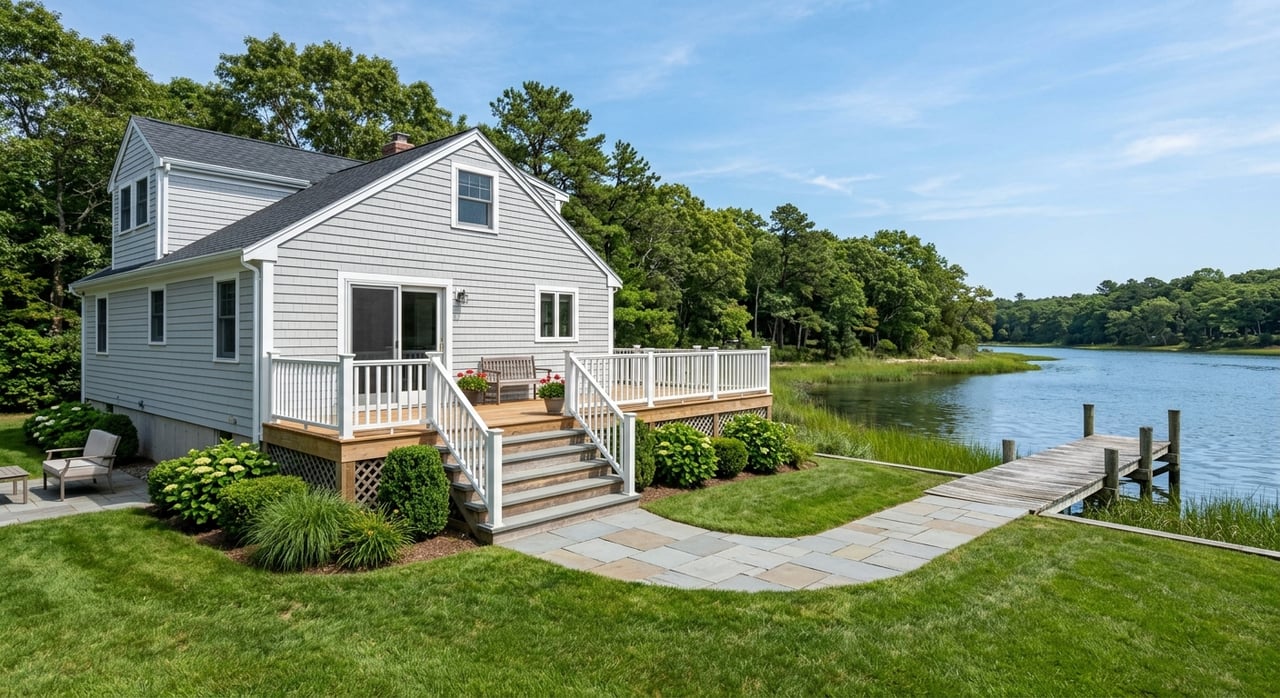
A waterfront home, by contrast, tends to put the shoreline at the center of daily life. If your ideal weekend includes views, boating access, and time outside by the water, that lifestyle can be hard to match.
Greenport price ranges right now
The 11944 market covers a wide price spectrum, so it helps to think in ranges rather than fixed rules. Current data shows a median listing price around $1,447,000 in the broader 11944 market, while Zillow places Greenport’s typical home value at $971,072 and its median list price at $1,352,000 as of June 30, 2026.
Redfin reports a three-month median sale price of $948,432, with homes taking a median of 67 days to sell. Realtor.com also describes Greenport as a buyer’s market, with homes selling for about 97 percent of list price on average in June 2026. That can give you more room to compare home types carefully instead of rushing into a decision.
Village-core pricing
Current village-core and near-core listings fall mostly in the low-to-mid seven figures. Recent examples include 609 1st Street at $1.099 million, 210 5th Street at $1.35 million, and 604 Main Street at $1.495 million.
Those examples suggest that if you want to stay close to the center of village life, you may find more options clustered in a narrower band. Historic character can also be part of the appeal in this area.
Waterfront pricing
Waterfront and sound-side listings currently stretch across a wider range. Recent examples include 100 Sound Drive at $2.7 million, 2100 Sound Drive at $2.599 million, and 160 Sound Drive at $5.695 million. A pending waterfront village property at 168 Sterling Street was listed at $2.4 million.
At the same time, Redfin’s waterfront search shows 14 waterfront listings with a median listing price of $1.35 million. That tells you inventory is thin and pricing can shift quickly, so any premium should be viewed as a snapshot rather than a fixed formula.
Choose waterfront for lifestyle first
If you are drawn to a waterfront home, the biggest advantage is obvious. You are buying direct access to views, shoreline ambiance, and in some cases a boating-focused lifestyle.
For many second-home buyers, that emotional value is the reason to choose waterfront in the first place. If waking up near the water is central to your vision of Greenport, that benefit may outweigh the extra complexity that often comes with coastal ownership.
Mitchell Park Marina also reinforces how boating and marine life shape the local market. The marina includes 60 floating slips and a 640-foot standing pier with dockage and hookups, which supports Greenport’s active waterfront culture even for buyers who do not own a private dock.
Waterfront tradeoffs to weigh
Waterfront ownership often comes with more exposure to flooding, erosion, and salt-related wear. FEMA states that flood insurance is required when a property in a Special Flood Hazard Area has a government-backed mortgage.
Coastal conditions can also affect the home itself over time. NOAA notes that shoreline armoring is often used to protect coastal property from erosion, and research from Texas A&M points to the way saline, humid environments can speed up corrosion and material breakdown.
In practical terms, that means you should expect a waterfront purchase to involve more than just the asking price. Insurance, maintenance, and shoreline conditions deserve close review before you make an offer.
Choose village homes for convenience
If your priority is easy access to everyday amenities, the village core may be the better fit. Living near Main Street puts you closer to restaurants, shops, parks, marine services, the North Ferry, and the LIRR.
That kind of location can make Greenport feel more compact and connected. You may find that daily errands, meals out, and weekend plans require less driving and less planning.
For many buyers, especially those balancing weekend use with city life elsewhere, that convenience has real value. A village or near-village home can support a simple lock-and-leave lifestyle while still keeping you close to the waterfront experience.
Historic district review matters
Some village-core homes come with another layer to understand. Under Greenport Village Chapter 76, a certificate of appropriateness is required before exterior alteration, restoration, reconstruction, demolition, or new construction for a landmark or a property in the historic district.
That does not make historic-district ownership a negative. It simply means you should understand review requirements early if you plan to change windows, siding, additions, or other exterior features.
If you love older homes and want to be near the center of town, this may feel like a fair trade. If you want maximum flexibility for exterior changes, it is worth checking the property’s status before moving forward.
Rental plans need extra homework
If you are hoping to offset costs with rental income, location alone will not tell you enough. In Greenport Village, the permit rules matter just as much as whether a home is on the water or near Main Street.
The Village of Greenport requires a valid permit for any residential rental. Rentals for fewer than 30 days require a short-term rental permit, and long-term permits do not allow short-term use.
What the village allows
The 2026 village FAQ explains that hosted short-term rentals only allow bedroom rentals while the owner or resident tenant is on-site. Owner-occupied short-term rentals require the owner to live in the home at least 120 days per year.
Resident short-term rental rules apply to certain two-dwelling properties. The same FAQ also states that permits issued before January 1, 2026 convert to long-term rental permits, so earlier use does not automatically carry forward as short-term rental rights forever.
Limits buyers should verify
Short-term rental eligibility is narrow. The village limits permits to certain single-family and two-family homes, does not allow them in multifamily buildings or commercial districts including the Waterfront Commercial District, and caps one short-term rental permit per property and one per person.
There are also operating rules, including one off-street parking space per bedroom and occupancy limits of 6 adults or 8 total occupants including children under age 3. New owners must apply within 30 days of purchase, although rentals can continue for up to 75 days while an application is pending.
The key takeaway is simple: waterfront does not automatically mean better rental potential. Before you write an offer, verify the zoning district and the exact permit path for that property.
A simple way to decide
When buyers compare waterfront and village homes in Greenport, the best answer usually starts with lifestyle and ends with logistics. A beautiful home that does not fit how you actually plan to use it can become frustrating fast.
Here is a practical way to frame the choice:
- Choose waterfront if views, direct water access, and boating matter most, and you are prepared for added flood, salt, and shoreline considerations.
- Choose village-core or near-core if you value close access to Main Street, transit, dining, shops, and a more compact daily routine.
- Pause and verify details if rental income is part of your plan, because permit category and zoning can change the picture quickly.
In a market where inventory is limited and pricing can move fast, clarity matters. If you know which tradeoffs you are comfortable making, you can search more efficiently and negotiate with more confidence.
If you want help comparing specific Greenport properties, zoning details, or pricing ranges, Cheryl & Regan can help you narrow the options and make a confident North Fork decision.
FAQs
What is the main difference between Greenport waterfront and village homes?
- Waterfront homes are generally more focused on views, boating, and shoreline living, while village homes are generally closer to Main Street amenities, the ferry, the LIRR, shops, and restaurants.
Are Greenport waterfront homes always more expensive?
- Not always. Current waterfront listings span a wide range, and with thin inventory, premiums can shift quickly. Village-core homes tend to cluster more tightly in the low-to-mid seven figures based on current examples.
Do Greenport village homes have historic district rules?
- Some do. In the historic district, exterior changes such as alteration, restoration, reconstruction, demolition, or new construction may require a certificate of appropriateness under village rules.
Do Greenport waterfront homes have higher upkeep?
- They can. Waterfront ownership often brings more exposure to flooding, erosion, salt air, and material wear, which can affect insurance needs and long-term maintenance.
Can you use a Greenport waterfront home as a short-term rental?
- Not automatically. In the Village of Greenport, short-term rental use depends on permit type, zoning district, and property type, so buyers should verify eligibility before making an offer.